

Vehicle A/C Service Guide: Maintenance, Warning Signs, and Solutions
We have all been there. It is a blistering summer afternoon,the pavement is practically radiating heat, and your car has been baking in the sun for hours. You jump inside, sweat already breaking out, and instantly crank the air conditioning dial to maximum.
But instead of
a refreshing blast of arctic air, you are greeted by a pathetic, lukewarm
breeze that feels like a hair dryer.
When your
vehicle’s climate control system quits, a comfortable drive turns into a
miserable, sweaty endurance test. The good news is that your automotive air
conditioning system rarely fails without warning. It gives you subtle clues
when it is struggling.

At Nyhus
Chevrolet, staying ahead of summer sweat means understanding auto air
conditioning services at Staples that keep your cabin cool, dry, and
comfortable. Let’s break down how your car's AC works, the warning signs of a
dying system, and the essential maintenance steps to fix it.
How Your Car’s AC Actually Works
To understand
why your AC stops blowing cold, it helps to realize that your car doesn't actually "create" cold air. Instead, it
removes the heat and moisture from the air already inside your cabin.
Your climate
control loop relies on a specialized gas called refrigerant. The system
operates in a continuous, pressurized loop across a few core components:
- The Compressor: The heart of the system, powered by your engine belt, which pumps and pressurizes the refrigerant.
- The Condenser: Located right at the front of your car near the radiator, it cools the hot, pressurized gas down into a liquid.
- The Evaporator: Hidden deep behind your dashboard, this cold core absorbs the heat from your cabin air as the blower fan pushes it past, leaving you with chilly air out of the vents.
Because this
loop relies on precise pressures and chemistry, a tiny leak or a worn-out
component can cause the whole system to collapse. That is where routine auto ac
service comes into play.
4 Warning Signs Your Car's AC
Needs Help
Before your
air conditioning fails completely, it will usually throw out a few red flags.
If you notice any of these symptoms, it is time to look into professional care.
1. The Lukewarm Breeze (Loss
of Cooling Power)
The most
obvious sign of trouble is a gradual drop in cooling capability. If your vents
are blowing air that is merely "coolish" rather than ice-cold, your
system's refrigerant level has likely dropped below its operating threshold.
2. Weak Airflow (The
Barely-There Breeze)
If the air
coming out of your vents is ice-cold but barely trickling out—even when you
have the fan speed cranked to maximum—you are dealing with an airflow
restriction. This is usually caused by a completely choked cabin air filter or
a failing blower motor assembly.
3. Strange Noises Behind the
Dash
Your AC should
operate with a gentle hum. If you turn on the
climate control and hear loud rattling, squealing, or a clicking sound from the
engine bay, your AC compressor clutch may be failing.
Ignoring this can cause the compressor to seize completely, turning a simple
repair into a costly replacement.
4. The Odor
If turning on
your AC releases a musty, moldy smell that makes you want to roll the windows
back down, moisture has collected on your
evaporator core. Over time, this dark, damp environment becomes a breeding
ground for bacteria and mold.
What a Professional Vehicle
A/C Service Entails
When you bring
your vehicle in to address a weak climate control system, technicians don't
just guess what's wrong. They rely on a time-tested checklist to bring your
system back to factory standards. These auto a/c service staples ensure every
weak point is inspected, cleaned, and corrected.
The Visual & Pressure Test
Every professional
ac service in Staples begins with a pressure and structural assessment. Because
your AC relies on a complex network of electronics, belts, and hoses,
technicians will often run it through a comprehensive multi-point vehicle inspection to see if
the compressor is maintaining the correct operating environment. They will also
use specialized UV dyes or electronic leak detectors to inspect lines, hoses,
and fittings for physical breaches.
The Cabin Filter Refresh
Often
overlooked, replacing the cabin air filter is one of the easiest ways to
restore interior comfort. This filter traps dust, pollen, and debris before it
enters your cabin. When it gets choked with dirt, it starves the system of
airflow and forces your compressor to work twice as hard.
The AC Recharge Service
If your system
is free of major component failures but running low on refrigerant due to
natural microscopic seepage over time, you need a specialized refresh. A proper
auto ac recharge service is much more involved than simply squirt-bottling a
generic retail canister into your engine bay.
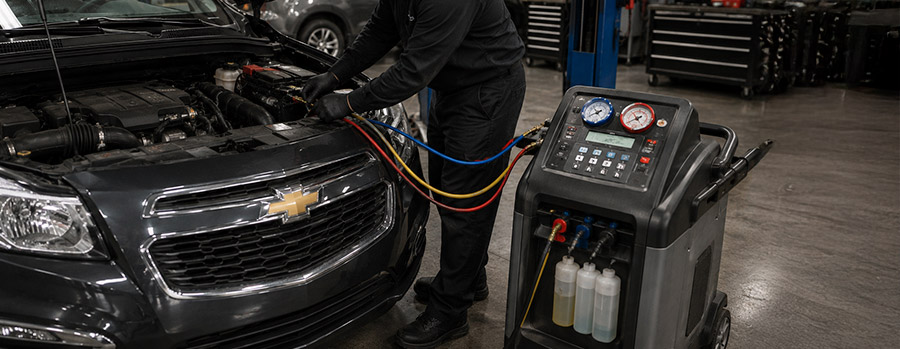
A professional
recharge involves a strict machine-driven sequence:
- Evacuation: The technician uses a recovery machine to safely vacuum out any remaining old refrigerant and moisture from the system.
- Vacuum Leak Testing: The system is held under a deep vacuum for 15 to 30 minutes. If the vacuum drops, it proves there is a physical leak that must be repaired before adding new gas.
- Oil Replenishment: Specialized lubricating oil is injected into the lines to keep the internal seals and the compressor pistons moving smoothly.
- Precision Recharge: The machine injects a factory-specified weight of fresh refrigerant down to the exact ounce. Too much refrigerant can damage your compressor just as easily as too little, making precision calibration critical.
Quick Auto AC Troubleshooting
Guide
|
What You
Experience
|
What It
Usually Means
|
The Right
Fix
|
|
Air is
blowing warm or lukewarm
|
Low refrigerant
levels or a slow system leak
|
Professional
leak check and pressure recharge
|
|
Air is cold,
but barely blows out
|
Choked cabin
air filter or blocked intake duct
|
Replace cabin
air filter; inspect blower motor
|
|
Loud
clicking or squealing under hood
|
Failing
compressor clutch or worn serpentine belt
|
Replace
compressor clutch or accessory drive belt
|
|
Musty, damp
smell from vents
|
Mold or
bacterial growth on evaporator core
|
Evaporator foam
cleaning treatment; cabin filter swap
|
|
Puddle of
water on passenger floorboard
|
Clogged HVAC
evaporator drain tube
|
Clear out the
blocked drain line underneath chassis
|
Stay Cool, Drive Safe!
Your vehicle's
air conditioning system is a vital tool for driver's alertness and safety
during extreme weather. Driving in a sweltering cabin increases fatigue and
slows down your reaction times.
By catching
symptoms like weak airflow or a gradual loss of cooling early, you can avoid
component failure and keep your system running reliably for years to come.
Staying on top of you routine Chevrolet maintenance schedulemakes it easy to check these items off your list before seasonal weather
changes turn a small leak into a completely frozen compressor. Keep your fluid
loops clean, dry, and leak-free to guarantee your comfort no matter how high the
thermometer climbs.
Is your car's climate control feeling more like a sauna than an air conditioner lately? Contact the service team at Nyhus Chevrolet today to schedule your multi-point auto AC inspection and restore your crisp, clean chill!