

Service Tire Monitor System Warning? Here's What It Means and How to Fix It
Your dashboard lights up with a warning: "Service Tire Monitor System."
Your first thought? "Great... what now?"
The good news is that this warning doesn't necessarily mean you have a
flat tire or need a brand-new set of tires. In many cases, it's your
Chevrolet's way of telling you that something isn't communicating properly with
the Tire Pressure Monitoring System (TPMS).
Understanding what this message means and knowing when to have it
checked, can help keep your Chevrolet safe, efficient, and ready for every mile
ahead.
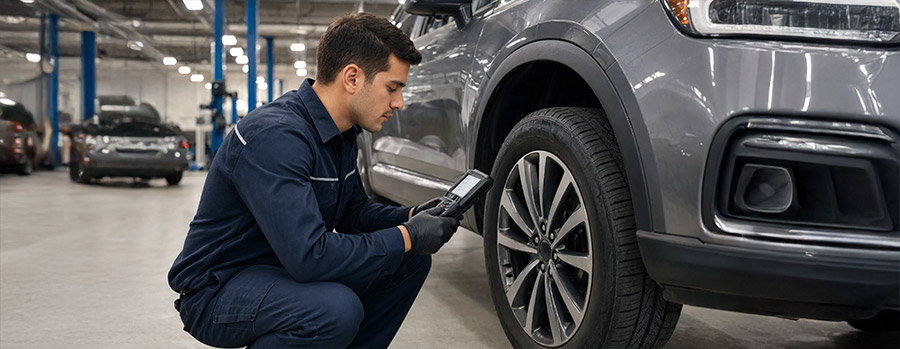
At Nyhus Chevrolet, we strive to make
service easy and effortless. Whether you're driving around Staples, commuting through central
Minnesota, or heading out for a weekend at one of the area's many lakes, here's
everything you need to know about your vehicle's Service Tire Monitor System
warning.
What Does "Service Tire Monitor System" Mean?
The Service Tire Monitor System message means your Chevrolet has
detected a problem with the Tire Pressure Monitoring System (TPMS) itself, not
necessarily with your tire pressure.
The TPMS continuously monitors the air pressure inside each tire using
electronic sensors mounted inside the wheels. If one of these sensors stops
communicating with your vehicle, becomes damaged, or experiences a fault,
you'll typically see the Service Tire Monitor System warning on your dashboard.
Unlike a standard Low Tire Pressure warning, this message indicates the
monitoring system needs attention.
At Nyhus Chevrolet, our certified technicians can quickly diagnose the
issue and restore your TPMS so it continues helping keep you safe on the road.
What Is a Tire Pressure Monitoring System (TPMS)?
Think of your TPMS as your tires' personal
assistant.
Instead of manually checking your tire pressure every day, the system
keeps an eye on each tire while you drive.
If tire pressure drops below the recommended level, the TPMS alerts you
before low pressure begins affecting your vehicle's:
-
Safety
-
Fuel efficiency
-
Tire wear
-
Braking performance
-
Handling
Modern Chevrolet vehicles rely on TPMS technology to help drivers catch
tire issues before they become bigger and more expensive problems.
What Causes the Service Tire Monitor System Warning?
Several issues can trigger this message, and thankfully, not all of them
require major repairs.

Some of the most common causes include:
-
A failed TPMS sensor
-
A weak sensor battery
-
Damaged tire pressure sensors
-
Sensor communication problems
-
Tire rotation without TPMS relearn
-
Recent tire replacement
-
Electrical issues within the TPMS
-
Faulty receiver module
Because the warning can have multiple causes, professional diagnostics
are the fastest way to determine exactly what's wrong.
How Do You Fix the Service Tire Monitor System on Chevrolet
Vehicles?
If you're wondering how to fix the Service Tire Monitor System in
Chevrolet cars, the solution depends on what'scausing the warning.
A certified technician may need to:
-
Check all four tire pressures
-
Scan the TPMS for fault codes
-
Relearn or recalibrate the sensors
-
Replace a faulty TPMS sensor
-
Repair damaged wiring
-
Reset the system after repairs
In many cases, the fix is straightforward and can be completed during a
routine service appointment.
Trying to ignore the warning, however, means you may no longer receive
alerts when your tire pressure becomes dangerously low.
Can You Drive with the Service Tire Monitor System Warning
On?
Usually yes, but you shouldn't ignore it.
If your tires are properly inflated and the warning only indicates a
TPMS fault, your vehicle will typically continue driving normally.
However, because the monitoring system isn't functioning correctly, it
may not warn you about future tire pressure problems.
Before taking a long road trip or driving in challenging Minnesota
weather, it's a smart idea to have the system inspected.
Is the Service Tire Monitor System the Same as the Tire
Pressure Light?
No, and this is one of the most common questions drivers ask.
A Low Tire Pressure warning means one or more tires have lost air
and should be checked immediately.
A Service Tire Monitor System warning means the monitoring system
itself isn't working correctly.
One points to your tires.
The other points to the technology monitoring your tires.
Both deserve attention, but they indicate different problems.
Why Does the Warning Sometimes
Appear After Tire Service?
Believe it or not, your tires may not be the problem at all.
After a tire rotation, installing new tires, or replacing wheels, your
Chevrolet's TPMS may need to be relearned so it recognizes each sensor's new
position.
If this relearn process isn't completed, the system may display a
Service Tire Monitor System warning even though your tires are perfectly
healthy.
That's why professional tire and auto service matters.
At Nyhus Chevrolet, every tire service is performed according to
Chevrolet's recommended procedures, including TPMS relearn when required.
Why Regular Tire and Auto Service Helps Prevent TPMS Problems
Routine maintenance isn't just about oil changes.
Regular tire and auto service allows technicians to inspect:
-
Tire pressure
-
Tire tread depth
-
TPMS sensors
-
Wheel condition
-
Valve stems
-
Tire wear patterns
-
Suspension components
Finding small issues early often prevents bigger—and more
expensive—repairs later.
It's also one of the easiest ways to maximize tire life while keeping
your Chevrolet performing its best.
Tire Maintenance Checklist
Keeping your tires in great condition doesn't have to be complicated.
|
Maintenance Service
|
Recommended Frequency
|
Why It Matters
|
|
Check Tire Pressure
|
Monthly
|
Helps maintain proper inflation
|
|
Tire Rotation
|
Every 5,000–7,500 miles
|
Promotes even tire wear
|
|
TPMS Inspection
|
During tire service
|
Ensures sensors work correctly
|
|
Tire Inspection
|
Every service visit
|
Detects damage and uneven wear
|
|
Wheel Alignment
|
If pulling or after an impact
|
Improves handling and tire life
|
Trust Nyhus Chevrolet for Tire and Auto Service in Staples
Whether your dashboard displays a Service Tire Monitor System warning or
you simply want peace of mind before your next drive, the team at Nyhus
Chevrolet is here to help.
Our certified technicians use Chevrolet-approved diagnostic equipment to
inspect your TPMS, check your tire pressure, perform sensor relearns, and
recommend only the services your vehicle actually needs.
If you're looking for trusted tire and auto service in Staples, visit Nyhus
Chevrolet for expert care, honest recommendations, and dependable Chevrolet
service.
Schedule your next service appointment with Nyhus Chevrolet today and keep your Chevrolet rolling safely, confidently, and mile after mile.