

Chevrolet Battery Service and Replacement
Did you know that a car battery's average lifespan is just 3–5 years, and in Minnesota, that window can close even faster?
Here in Staples, where winter temperatures
regularly drop to single digits and vehicles sit outdoors overnight through
some of the coldest months in the country, your car battery is one of the
hardest-working components under the hood.
At Nyhus Chevrolet in Staples, we perform
battery inspections and replacements year-round for drivers across Staples,
Motley, Pillager, Wadena, and beyond. Time and again, we've seen customers come
in suspecting an alternator or starter issue, only to find the real culprit was
a weak or failing battery. That's exactly why regular battery service matters. It
ensures your Chevy starts reliably, performs at its best, and doesn't leave you
stranded in the middle of the road.

In this guide, we'll walk you through
everything you need to know: what a battery service actually involves, when
it's time for a car battery replacement, what happens during a professional car
battery installation service, and simple home care tips to get the most out of
your battery.
How
Long Does a Car Battery Last in Minnesota?
Under normal conditions, most car batteries
last between three and five years. In Minnesota, real-world lifespan often
falls toward the shorter end of that range. Here's why:
Extreme cold: At 0°F, a
battery can lose up to 50% of its starting capacity while your engine
simultaneously demands more power to turn over in thickened oil. That
combination is exactly what pushes marginal batteries over the edge.
Short-trip driving:Quick runs around Staples doesn't give your alternator enough time to fully
recharge the battery between starts. Over time, repeated partial charging
cycles degrade battery capacity faster than longer drives would.
High electrical load:Remote starters, heated seats, heated steering wheels, and infotainment systems
are standard features on many Chevrolet models, and they all draw from the
battery. The more your vehicle's electrical system is working, the harder the
battery has to work alongside it.
Vehicle age and battery history:A battery that has never been tested or serviced in its life span is a problem
waiting to happen. Even one that appears functional at four years old is
statistically close to the end of its reliable service life.
What Happens During a Professional Battery Replacement
Service?
Replacing a car's
battery might look straightforward, but modern Chevrolet vehicles have complex
electrical systems that require precision and care. An improper installation
can trigger warning lights, cause charging errors, or interfere with the
vehicle's onboard computer, none of which you want after a basic battery swap.
Here's what our process looks like at Nyhus
Chevrolet:
Battery testing and diagnosis: We
test your battery and charging system under simulated load conditions to
confirm replacement is needed and that the charging system itself is healthy.
Safe removal: The old
battery is disconnected starting with the negative terminal to prevent
electrical shorts or module damage.
Terminal and cable inspection:Corrosion and buildup are cleaned away to ensure a strong, stable connection
with the new battery.
GM-approved installation:The replacement is matched precisely to your vehicle's CCA rating and battery
type. Chevrolet models with Auto Stop/Start require
an AGM battery, not a standard flooded cell.
Smart Battery Sync:Modern Chevys like the Silverado and Equinox require a computer
"re-learn" to recognize a new battery. We include this digital reset
with every install to ensure your new battery lasts its full lifespan.
System verification and eco-friendly
recycling: We confirm that all systems are charging
correctly before the vehicle leaves and dispose of the old battery responsibly
at no extra effort on your part.
DIY Tips to Extend Battery Life at Home
Regular professional service is the
foundation, but a few simple habits between appointments can meaningfully
extend your battery life. Here's what you can do at home:
1. Keep Terminals Clean: Corrosion
at the battery terminals restricts the flow of electricity. Mix a small amount
of baking soda with water, scrub the terminals gently with a soft brush, dry
thoroughly, and apply a corrosion-preventive spray. It takes ten minutes and
makes a real difference.
2. Avoid Frequent Short Drives: Short
trips don't allow the alternator to fully recharge the battery. If most of your
driving is brief, try taking a longer drive occasionally to let the charging
system do its job and keep your battery at a healthy charge level.
3. Check Battery Voltage at Home:A basic multimeter costs under $20 and lets you monitor your battery's resting
voltage. A healthy battery should read around 12.6 volts with the engine off.
If you're seeing 12.2 volts or below consistently, it's time to schedule a
service.
4. Use a Trickle Charger Through Winter:If your vehicle sits for extended periods during Minnesota winters or if you
have a secondary vehicle that doesn't get driven daily, a trickle charger (also
called a battery maintainer) keeps the battery at optimal voltage without
overcharging it. It's one of the simplest and most effective tools for
extending battery life in cold climates.
5. Make Sure the Battery Is Securely Mounted:A loose battery vibrates with road movement, which
accelerates internal wear. After any service or inspection, confirm that the
battery hold-down is tight, and the battery isn't shifting in its tray.
6. Turn Off Accessories Before Shutting Off
the Engine: Headlights, heated seats, and infotainment
systems left running after the engine is off draw directly from the battery.
Making it a habit to power everything down before you shut off the ignition is
a small step that adds up over time.
When Should You Replace Your Car Battery?
Car batteries rarely fail without warning.
They usually give you a few signals first. Catching those signs early is the
difference between a planned replacement and an unexpected breakdown on MN-210
or CR-2.
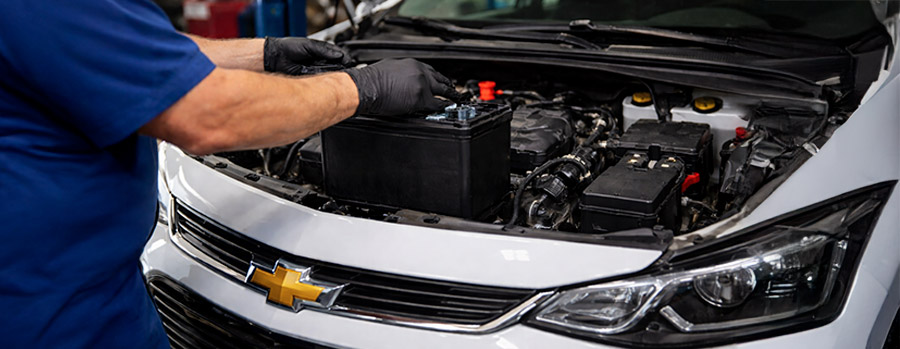
Here are the most common signs you may need a
car battery replacement service:
Slow or labored engine cranking:If your Chevy takes noticeably longer to turn over than usual, especially on
cold mornings, your battery is likely struggling to deliver full starting
power.
Dim headlights or flickering electrical
accessories: A weak battery can't maintain stable
voltage, which shows up as inconsistent power to your lights, dashboard, or
infotainment system.
Battery warning light on the dashboard:This light can indicate low voltage, a charging issue, or a failing battery. It
should never be ignored, regardless of how the vehicle seems to be running.
Swollen or bloated battery case:Temperature extremes, including Minnesota's brutal cold and the heat of summer,
can cause internal damage that physically deforms the battery casing. If the
sides look bowed or bulged, the battery needs to come out immediately.
Frequent jump starts:Needing a jump more than once in a season isn't bad luck, it's a clear sign the
battery is no longer recovering between drives. That's a replacement, not a
coincidence.
Battery age: If your
battery is four or more years old and hasn't been tested recently, don't wait
for a failure to find out where it stands. Schedule a test before winter
arrives.
If you're noticing any of these issues, bring
your vehicle in for a battery replacement service with a professional.
Get
Professional Chevrolet Battery Service at Nyhus Chevrolet
A failing battery rarely announces itself at
a convenient time. The good news is that with regular testing, a little home
maintenance, and a trusted service team behind you, it almost never has to
catch you off guard. Whether your battery is showing warning signs, approaching
the four-year mark, or you simply want peace of mind before another Minnesota
winter, Nyhus Chevrolet in Staples is ready to help.
Don't wait for a dead battery to tell you it was time, schedule your Chevrolet battery service with us today and go into the cold season fully prepared.